RESONIKS closes seed round to scale AI-powered acoustic quality control across European manufacturing
QCFlex, our new standalone system that brings fully automated, AI-powered acoustic testing directly in-line to the manufacturing process.
Manufacturing lines lose a lot of time and money when defects are discovered too late. Some of defects are discovered after assembly, after shipping, after the damage is done. Traditional inspection methods are slow, inconsistent, and often not easy to scale. Acoustic testing has started to show promise as an alternative, but until now it remained a specialist tool, confined to controlled lab environments far removed from real production.
RESONIKS QCFlex is changing that.
Our fully automated, AI-powered acoustic testing system that integrates seamlessly into any production line, enabling manufacturers to inspect every single part with precision and speed.
What is acoustic testing?
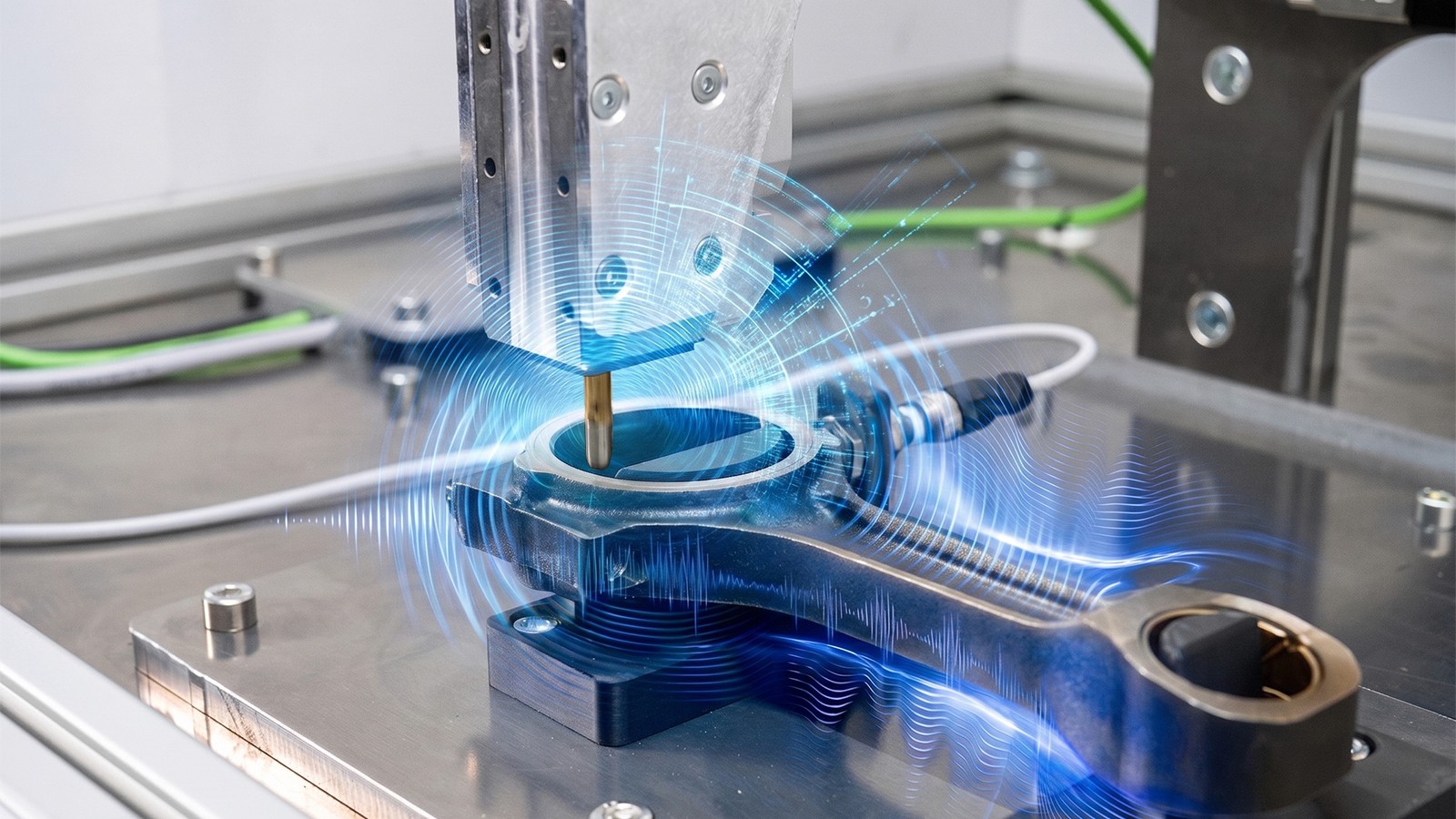
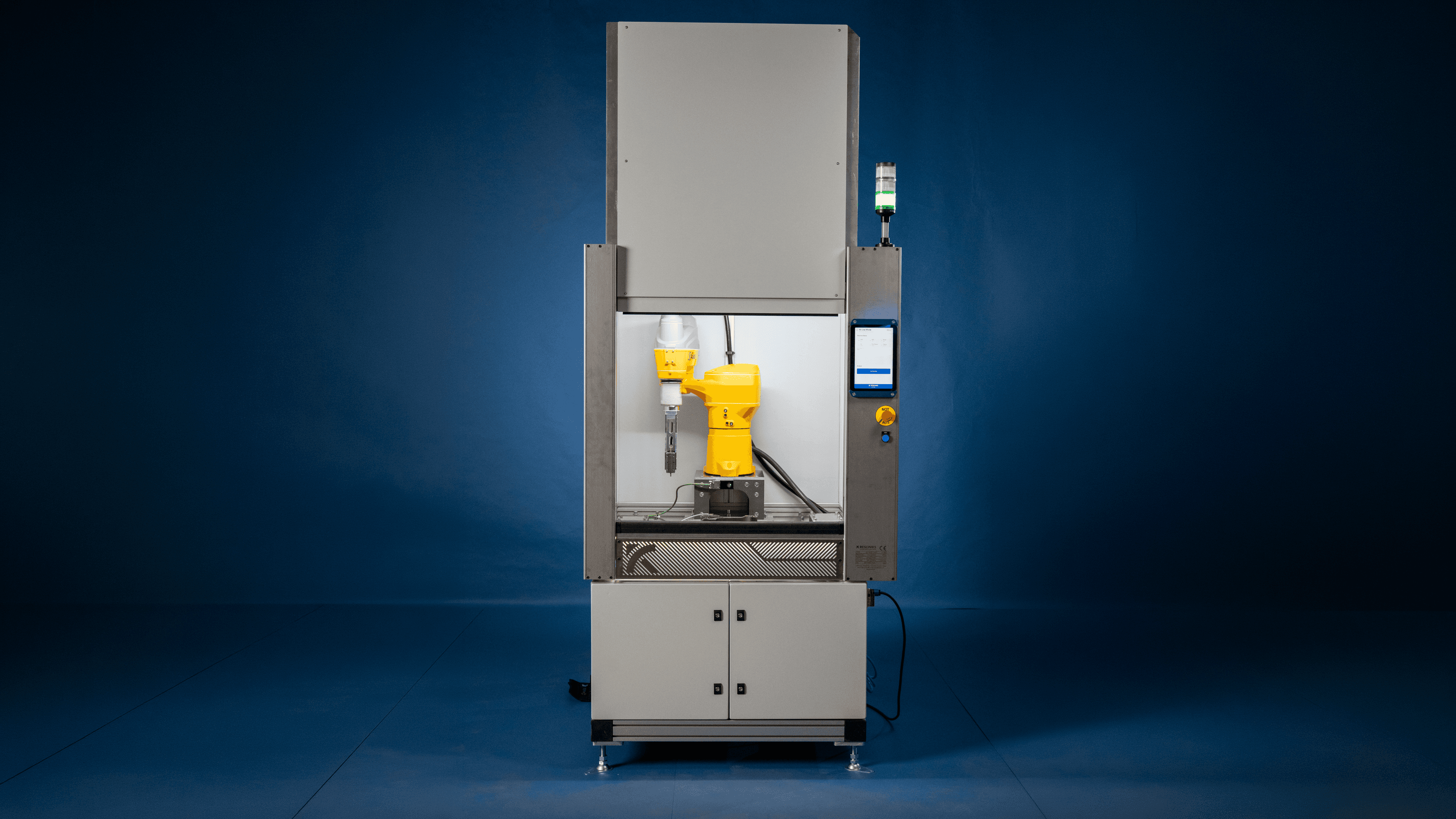
Acoustic testing works by striking a part and listening carefully to the sound it makes. A flawless part produces a characteristic acoustic "fingerprint." A part with a crack, void, or internal defect produces a subtly different sound. Human ears and other defect detection equipment struggle to detect these differences reliably. AI-trained models, however, can identify them consistently even in noisy industrial environments.
RESONIKS QCFlex brings this capability directly to the production floor, detecting surface and internal structural defects in metal, composite, ceramic, and other rigid materials, in seconds, with zero human subjectivity.
How QCFlex works
The system is built around a state-of-the-art closed-loop sensor architecture:
The precision hammer strikes. The second-generation RESONIKS precision hammer (SH2) is mounted on a highly accurate, silent SCARA robot. It strikes the test part multiple times with an adjustable, fully reproducible impact force, eliminating variability from the measurement.
Microphones capture the acoustic fingerprint. RESONIKS' second-generation microphones (MP2) record the resulting sound with a bandwidth of 20 Hz to 80 kHz. Total microphone calibration means zero variation between units. Every reading is precise and comparable.
AI delivers a pass/fail decision. Machine learning models, trained specifically for each application, convert the acoustic data into a clear pass or fail result within seconds. Every decision is fully traceable and audited by design.
Built for the factory floor
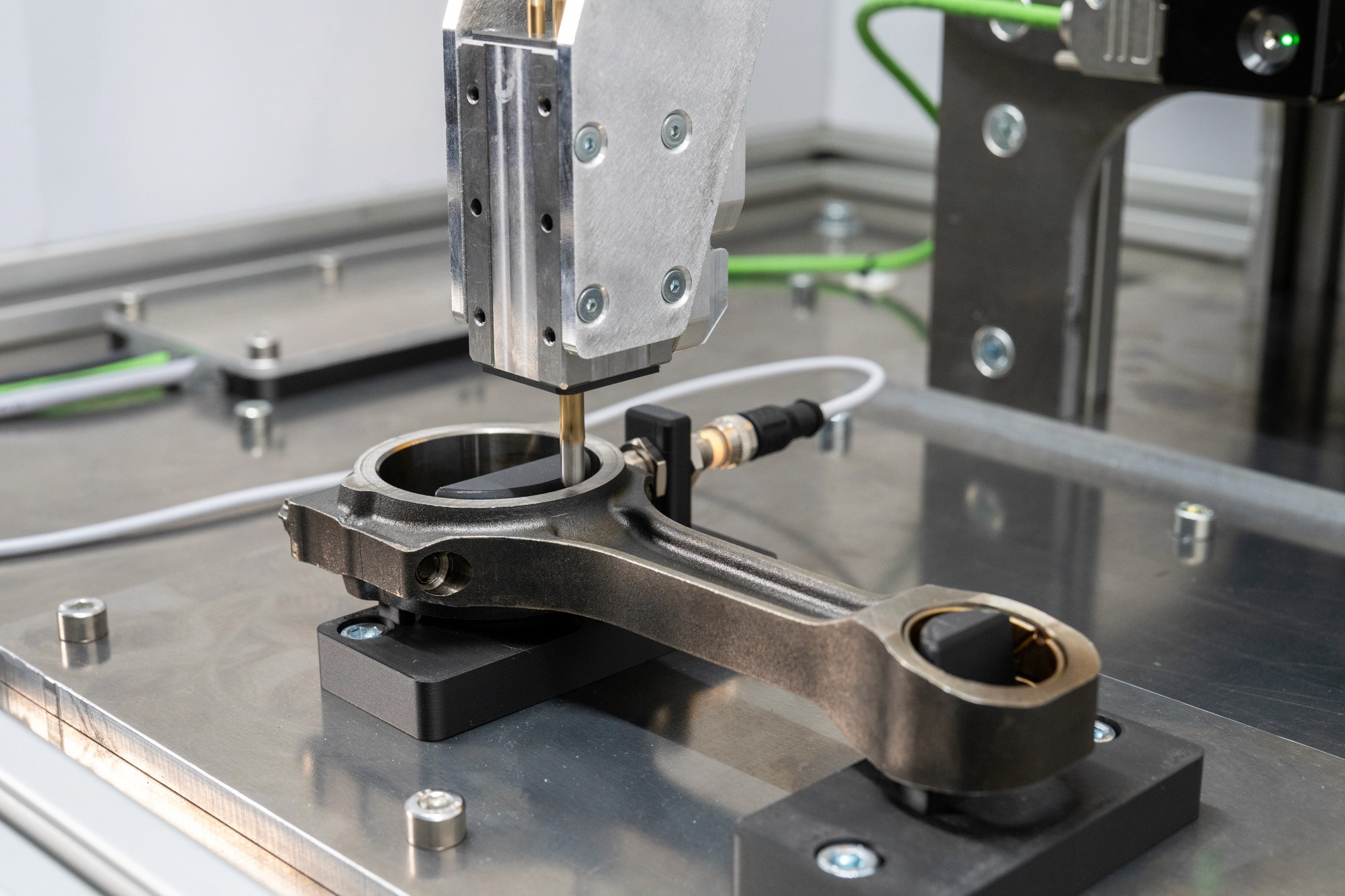
Moving acoustic testing out of controlled lab conditions is a real engineering challenge. Vibration, temperature swings, humidity, and airborne dust are constant variables on a production line. QCFlex has been designed from the ground up to handle all of them.
An automated opening and closing mechanism seals sensitive components from the environment. A robotised, interchangeable fixture system lets operators test different part types on the same machine. The system handles parts up to 800 mm in size and 200 kg in weight, and a new intuitive touchscreen interface means no specialist training is required to run daily inspections.
The business case: OEE and sustainability
The strategic value of QCFlex extends well beyond catching defective parts. When integrated early in the production line, it prevents defective parts from consuming further processing resources. This saves energy, materials, and machine time at every subsequent stage. This directly improves Overall Equipment Effectiveness (OEE), the key metric manufacturers use to measure productive output versus total available capacity. Fewer defects passing downstream means fewer reworks, less scrap, lower warranty costs, and a more sustainable production process overall.
From pilot projects to full industrial deployment
Our launch marks an important milestone for RESONIKS. We are now moving beyond pilot projects to a product ready for large-scale industrial use.
From setup and configuration to technical guidance, model training, and ongoing maintenance, RESONIKS supports every deployment end to end. We work directly with manufacturers to tailor QCFlex to each production environment, ensuring the system is configured for the specific quality requirements of every application.
Manufacturing has always advanced by finding smarter ways to identify problems earlier, reduce uncertainty, and build confidence into every process. Quality control is ultimately about trust. QCFlex is designed to help manufacturers strengthen that trust.