Resonance, Sound, and Structure: From Snow Physics to Industrial Inspection
Snow has a measurable impact on sound. Its porous structure absorbs acoustic energy, reducing reflections and ambient noise. Under certain conditions, compacted or icy snow can also resonate when subjected to vibration. These effects are well documented in physics and acoustic research.
Resonance, the way a structure responds to excitation, is not unique to snow. It is a fundamental property of all materials. By analysing how an object vibrates and emits sound, it is possible to infer details about its internal structure, including hidden defects. This principle underpins a growing class of acoustic inspection techniques used in science and industry.
How Snow Changes Sound
Fresh snow absorbs sound extremely well. Each snowflake has a complex shape, and when millions of them pile up, they create a soft, porous surface filled with tiny air pockets. These pockets trap sound waves instead of reflecting them. That’s why traffic noise fades and footsteps sound softer after snowfall.
Scientists have studied this effect for years. Research explains how snow acts as a natural sound absorber because of its porous structure and low density. In simple terms, snow makes the world quieter by soaking up sound. ScienceDaily
When Snow Resonates
Snow doesn’t only absorb sound, it can also resonate. Hard-packed or icy snow can vibrate when pressure is applied. This is why skis sometimes “sing” on icy slopes or why snow makes a sharp, crisp sound under your boots on a cold winter day.
In rare cases, frozen ground and snow layers can release built-up stress in events known as frost quakes, or cryoseisms. These phenomena create deep, resonant sounds and vibrations.
Each snowpack has its own acoustic signature. As snow melts, refreezes, or becomes compacted, the way it responds to sound changes. Scientists even use acoustic signals to study snow structure and stability, particularly in avalanche research. Acoustic Snow Stratigraphy Measurements
What Snow Teaches Us About Resonance
Snow may look simple, but it hides a complex internal structure. By listening to how snow responds to vibration, scientists can learn about its density, layers, and weaknesses. Sound reveals what the eye cannot see. This principle appears throughout nature and it is also the foundation of modern industrial testing.
How RESONIKS Uses the Same Physics
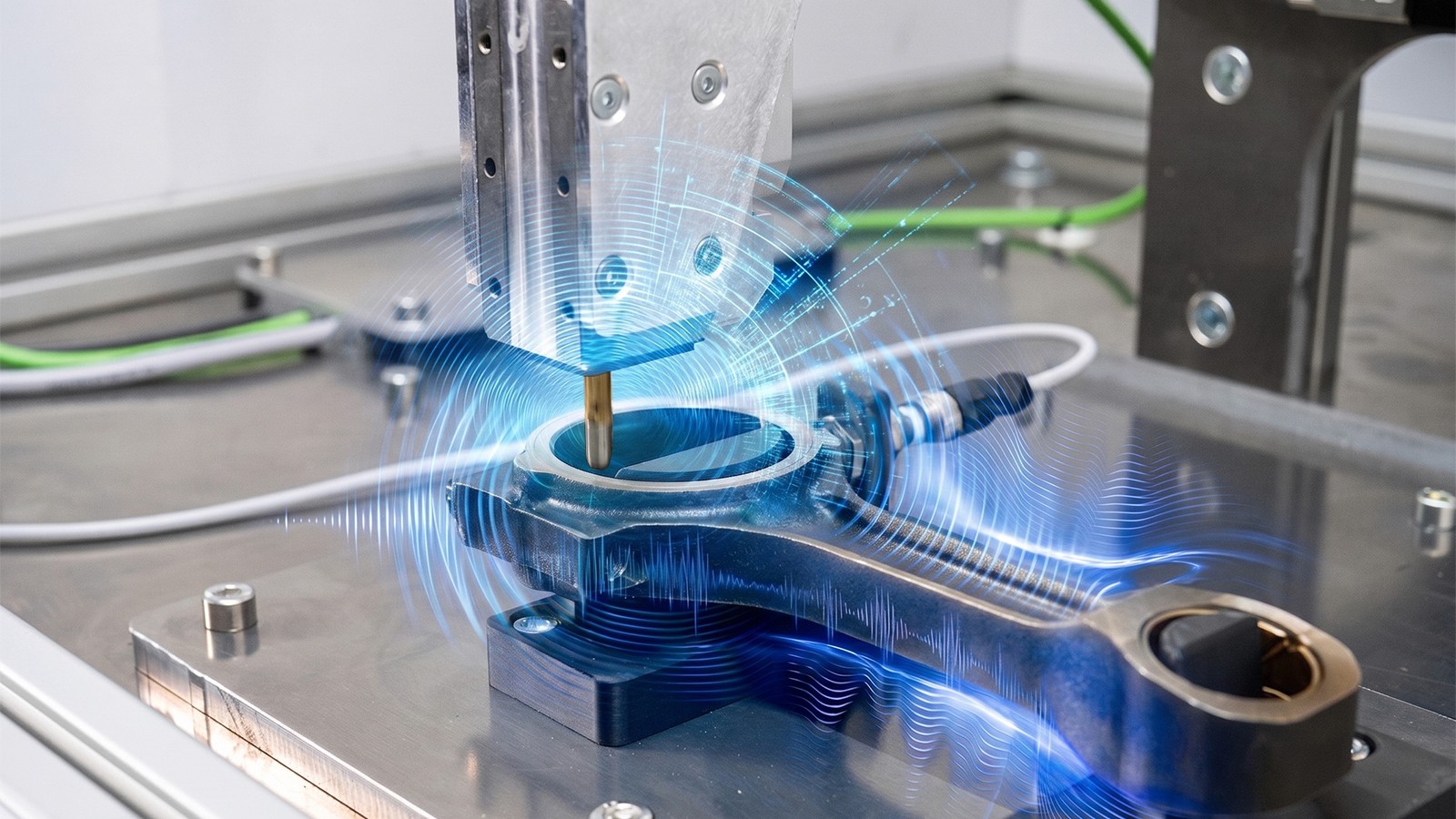
At RESONIKS, we apply the same physical principles behind snow’s resonance to industrial non-destructive testing (NDT). Instead of snow, we listen to metal and composite components used in manufacturing.
Our technology gently excites a component with controlled vibration and listens to its acoustic response. Every high-quality part has a stable and repeatable resonance signature. If hidden issues such as micro-cracks, voids, or internal defects are present, the sound changes, even when nothing is visible on the surface. Using acoustic AI, we analyse these signals in seconds. This allows us to detect defects faster, more reliably, and at a lower cost than traditional inspection methods.
Acoustic AI and Industrial NDT
Just as snow carries its history in how it absorbs and resonates with sound, manufactured components carry information about their quality in their vibrations. Acoustic AI and resonance testing allow us to hear that information clearly. By integrating this technology directly into production lines, RESONIKS helps manufacturers move toward fully automated, zero-defect production , improving safety, reliability, and efficiency across industries.
A Snowy Christmas and a Resonant Future
Snow reminds us that the world is full of hidden patterns and subtle vibrations that shape our experiences, often in ways we don’t immediately see. At RESONIKS, we take that same elegance of physics and apply it to one of industry’s biggest challenges: ensuring quality, reliability, and safety in the parts that build our world.
Whether it’s a quiet winter morning or a factory floor running at full speed, resonance helps us understand the structures around us. And with acoustic AI, we can now hear what was once inaudible, unlocking deeper insight, better quality, and a more resilient future.
This Christmas, as snow softens the world and adds magic to the season, we’re reminded why we do what we do: listen, understand, and protect the integrity of the things that matter most.